JW SteelCrafts
Gurkha Kukri Knife Handmade Traditional Nepali Forged Blade
Gurkha Kukri Knife Handmade Traditional Nepali Forged Blade
Couldn't load pickup availability
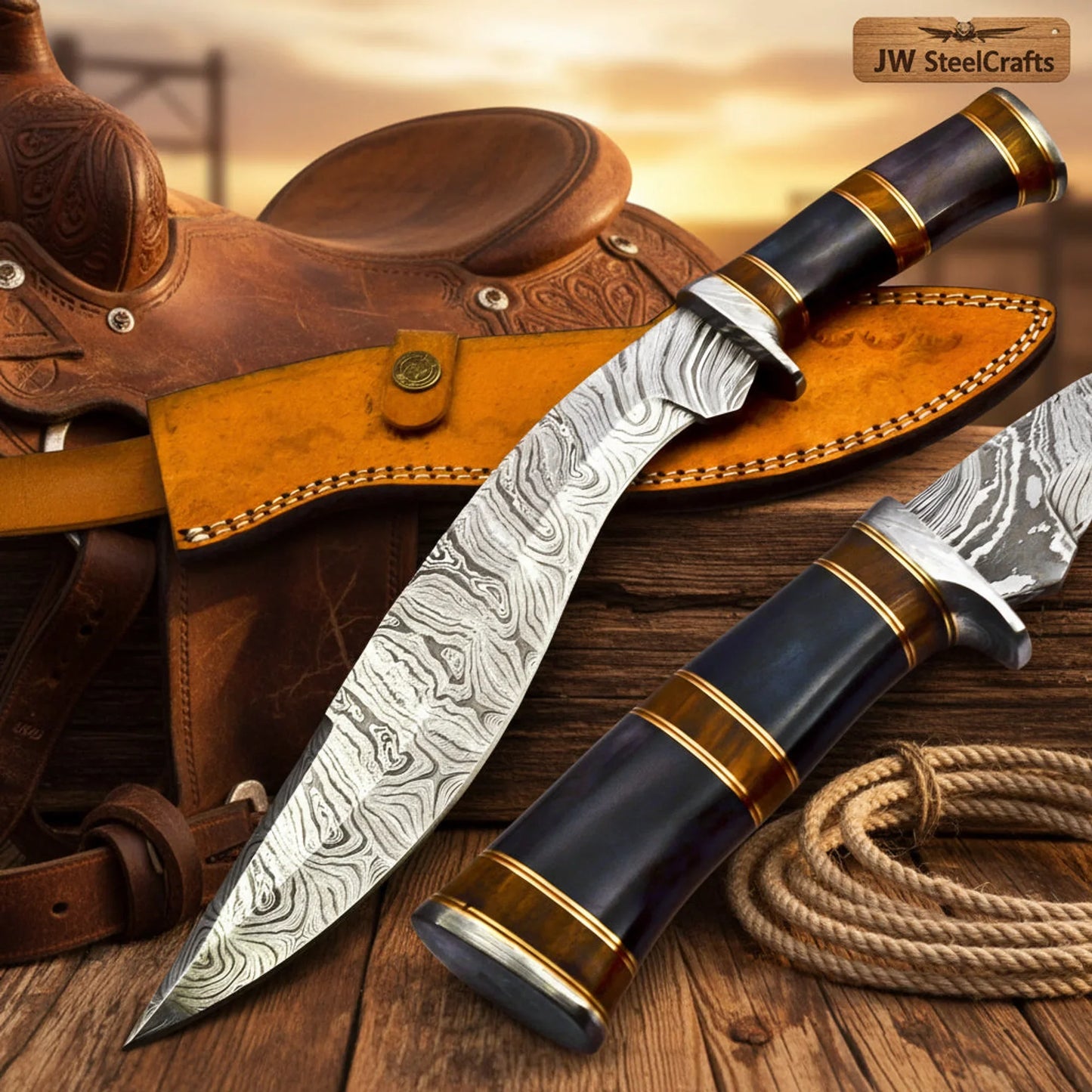
The Gurkha Kukri knife is one of the most recognized traditional blades in the world, known for its distinctive curved shape and deep roots in Nepali history. This handmade Kukri stays true to that heritage, combining hand-forged Damascus steel with the traditional design carried by Gurkha soldiers and used across generations for both practical work and ceremonial purposes.
At JWSteelCrafts, we get a lot of questions about this style. So let's break down what makes it special and why the traditional inward curve still holds up as a serious chopping tool today.
What Exactly Is the Gurkha Kukri Knife?
This traditional Kukri knife features the classic inward-curved blade that sets it apart from straight-edge knives. The curve shifts weight toward the front of the blade, giving it natural chopping power while keeping the handle end lighter and easier to control. This design has made the Kukri a trusted tool for outdoor tasks, camp work, and general utility use for centuries.
Specifications
| Feature | Details |
|---|---|
| Brand | JWSteelCrafts |
| Overall Length | 14 to 15 Inches |
| Blade Material | Hand-Forged Damascus Steel |
| Handle Material | Wood |
| Style | Traditional Nepali Gurkha Kukri |
| Construction | Heat-Treated, Full Tang |
Why the Traditional Gurkha Curve Still Matters
Built from hand-forged Damascus steel, this Gurkha Kukri knife features a layered, wavy pattern created through a traditional folding and forging process. Beyond its visual character, this process also strengthens the blade and helps it hold an edge longer. Each knife is heat-treated for durability, ensuring it performs reliably for outdoor and utility use.
Wood Handle: Comfort and Character
As a Nepali Kukri knife rooted in centuries of tradition, this piece also holds strong appeal for collectors and history enthusiasts. Its authentic shape and hand-forged construction make it a meaningful addition to any collection, a striking wall display piece, or a thoughtful gift for those who appreciate traditional and historically inspired blades.
Damascus Steel: More Than Just a Pretty Pattern
Hand-forged Damascus steel delivers a unique pattern along with improved strength and edge retention. The traditional Gurkha curve design provides natural chopping power for outdoor and utility tasks, and the heat-treated construction is built for durability and reliable performance.
Full Tang Construction, and Ready for Field Use
This Gurkha Kukri knife is well suited for outdoor enthusiasts who want a dependable chopping and utility tool for camping or bushcraft use. Browse the full Handmade Kukri Knives Collection for more field-ready blades built the same handcrafted way.
What Comes With It
Its traditional design also makes it a strong choice for collectors, history enthusiasts, and those drawn to Nepali and Gurkha heritage. Browse more handmade options at JWSteelCrafts.
Who This Knife Is Really For
- Outdoor enthusiasts who want a dependable chopping and utility tool
- Collectors and history enthusiasts drawn to Nepali and Gurkha heritage
- Gift buyers looking for a meaningful, historically inspired blade
- Anyone building a wall display collection of traditional weapons
Caring for Your Damascus Blade
- Keep the blade clean and dry after use
- Apply a light coat of oil regularly to help prevent rust and maintain its pattern
- Store it in a dry place away from humidity
- Avoid leaving the blade wet or exposed to humidity for long periods
- Clean the wood handle with a dry or slightly damp cloth
- Keep it away from children when not in use
FAQs
What is a Gurkha Kukri knife traditionally used for?
It's historically used as a multipurpose outdoor and utility tool, valued for chopping, camp tasks, and general use by Gurkha soldiers and Nepali communities.
What makes the Kukri blade shape unique?
Its inward curve shifts weight toward the blade's front, giving it natural chopping power while keeping the handle lighter and easier to control.
Is this Kukri knife handmade?
Yes, each knife is hand-forged using traditional techniques and heat-treated for durability.
Does the Damascus pattern affect the blade's strength?
Yes, the forging process that creates the Damascus pattern also improves the blade's overall strength and edge-holding ability.
Is this Gurkha Kukri knife based on a traditional design?
Yes, it follows the traditional Nepali Kukri shape historically associated with Gurkha soldiers.
How do I care for a Damascus steel Kukri knife?
Keep the blade clean and dry after use, and apply a light coat of oil regularly to help prevent rust and maintain its pattern.
Is this Kukri knife suitable for collectors?
Yes, its authentic design and hand-forged craftsmanship make it a popular choice among knife and history collectors.
Share